“We hold these Truths to be self-evident, that all Men are created equal…”
Imagine a place where the ideas that formed a nation were not only spoken — they were voted on, debated, perfected, and signed. That’s Independence National Historical Park in Philadelphia, Pennsylvania — often called “America’s most historic square mile.”
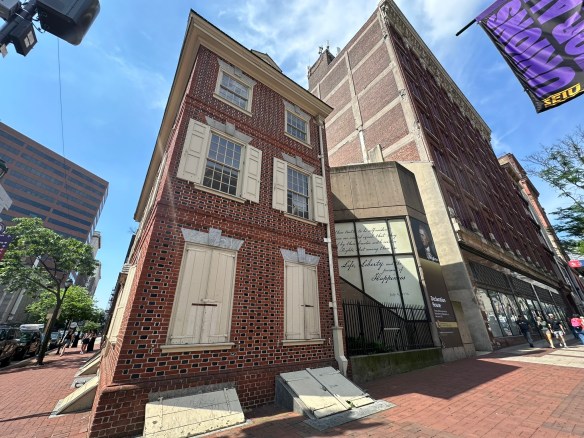
The park wasn’t always a unified place you could stroll through. It began as a scattering of historic sites tied to the birth of the United States–Independence Hall (then the Pennsylvania State House), Carpenters’ Hall, the Liberty Bell, and other landmarks. In 1948, this cluster of landmarks was officially authorized as a historic park. The NationalPark Service began administration in 1950, with the park formally established in 1956. Over decades it expanded to protect more of Old City and Society Hill’s historic streets — now about 55 acres of vital American history. This park is also a UNESCO World Heritage Site because it isn’t just local history — it’s world history.
What makes this park unique is not just the buildings, but the ideas forged inside them — the concepts of liberty, democracy, and constitutional governance that influenced nations around the globe.
“Must-see” areas of the park to add to your itinerary:
Independence Visitor Center–Start here. It’s the gateway — with free maps, park info, and orientation films that set the stage.
Independence Hall — Where history was literally made: The Declaration of Independence was debated here, in the Assembly Room, in 1776, and the Constitution later in 1787. The same space saw debates on the Articles of Confederation, and the very chair where George Washington sat during the Constitutional Convention — the “Rising Sun” chair — still stands. This building testifies to how 13 colonies decided to become a single nation — a dramatic leap in human governance that shaped the modern world. Note: Tickets for guided tours are free but required during peak months, so plan ahead.
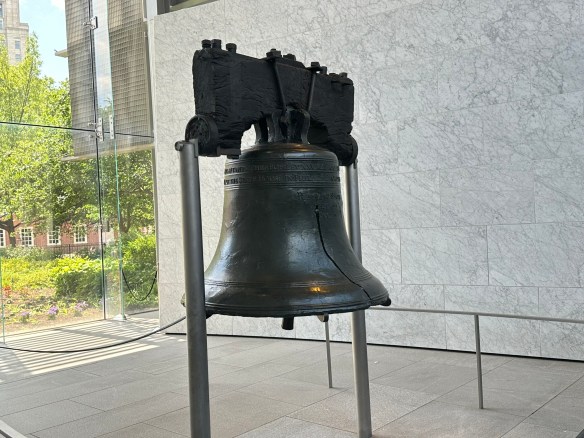
Liberty Bell Center — Icon of Freedom: Across from Independence Hall stands the Liberty Bell, a globally recognized symbol of liberty and justice. Cast in 1752, its famous crack came early and remains its defining feature.
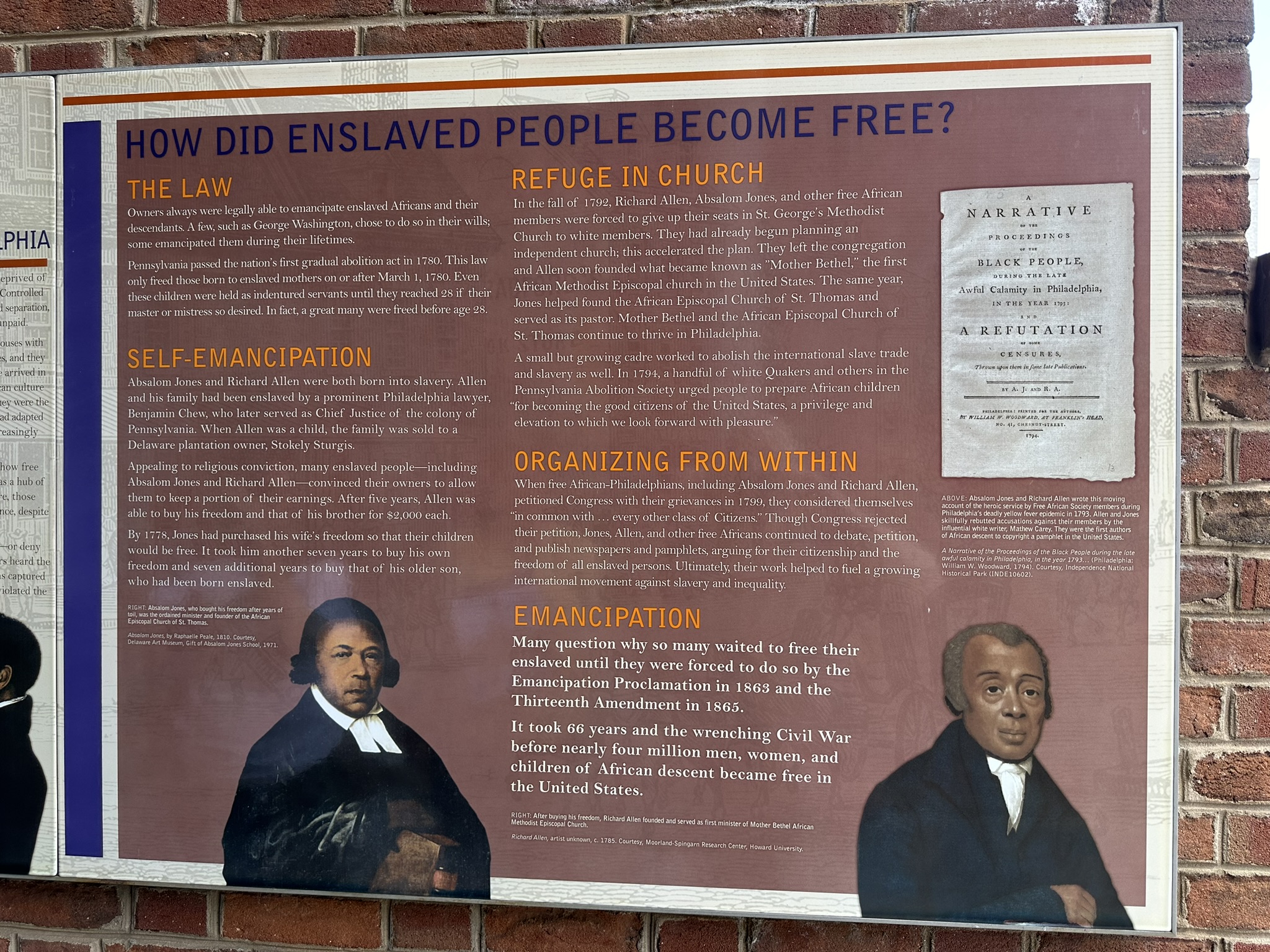
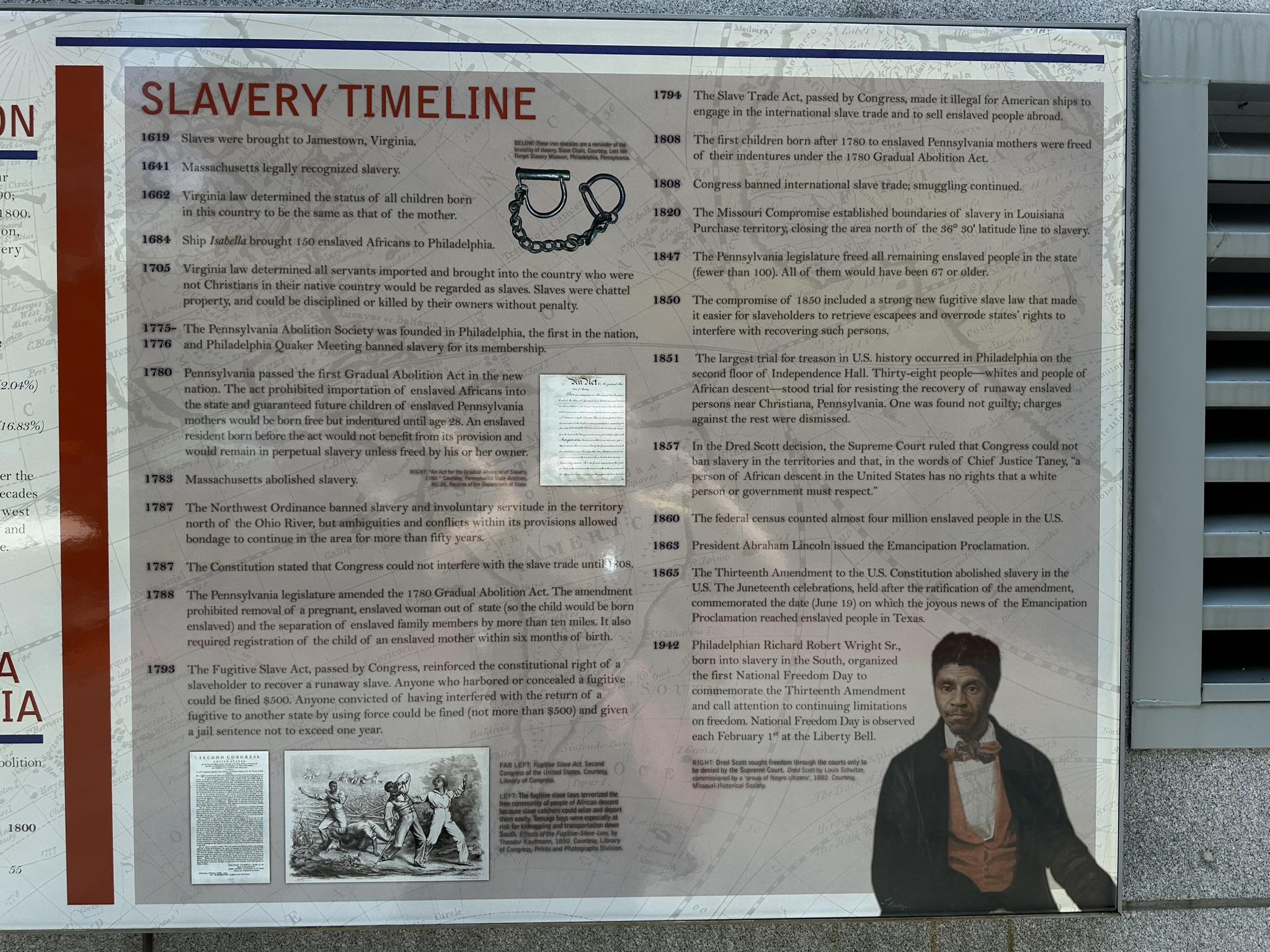
Presidents’ House Site: Near the Bell you’ll see the remains of the home where George Washington and John Adams lived while Philadelphia was the national capital (1790–1800). Recent exhibits explored the lives of the enslaved people who lived and worked there, underscoring the era’s contradictions between freedom and slavery. This is history that cannot be changed regardless of how some people would prefer to do so.
Franklin Court & Benjamin Franklin Museum: Honor Benjamin Franklin — inventor, diplomat, founding father. His house site and museum are nearby, with exhibits on his life and contributions.
The park today spans over 50 acres and ~20 blocks, from historic squares and buildings to restored streetscapes. The Independence Visitor and the Liberty Bell Center are open daily 9:00 am–5:00 pm. The President’s House Site is open daily 7:00 am–10:00 pm. Different halls and different buildings may have different hours or may be closed so check ahead before your visit.
Admission to most park sites is free. Entrance to Independence Hall is by both guided and self-guided tours. Check here for current hours. Guided tours require tickets that can be reserved through Recreation.gov. There is a $1 per ticket handling fee. Interagency passes do not apply to these fees. The Benjamin Franklin Museum charges an interpretive fee and the National Constitution Center, a partner of the park, charges an admission fee. Other museums and halls may have different fees and schedules so make sure you check before your visit.
MILE MARKER: Did you know that The Declaration wasn’t signed all at once? Despite the iconic painting, the Declaration of Independence wasn’t signed in one dramatic moment. Most delegates signed weeks later, and some weren’t even in town on July 4. So Independence Day is more of a publication date than a signature party.
HIKE IT!: No hiking trails here but you will walk! This park consists of 55 acres of buildings, halls, exhibits, and squares. You’ll definitely get some steps in!
 Two Chicks with Hiking Sticks