We recently took you to a place called Big Thicket National Preserve that highlighted a wealth of biodiversity in Texas. Today, we’re going to talk about another place that also encompasses a diverse sample of nature that will take you underground into caves, through the desert, hiking through pine trees, into mountains, and traversing through the stars! Today, we’ll be talking about Great Basin National Park in Nevada!
The first people documented living in the Great Basin area were what archeologists call the Paleo-Indians. For over 12,000 years, these people were thought to be big game hunters with no permanent houses because they were nomadic and followed the animal herds. The next group to occupy this area were referred to as the Great Basin Desert Archaic. This group were hunter-gatherers who also followed animal herds but collected native plants but also learned how to use grinding stones to process seeds. They used their crafts to trade with other peoples.
These groups eventually led to the Fremont and Shoshone cultures, with the Shoshone still living in the area today. In addition to the Shoshone, the Ute, the Paiute, the Goshute, and the Washoe also inhabited this region. Small family groups hunted and subsisted on the land and its natural resources. The people were early hunters and gatherers who eventually learned to farm and fish. Everything they needed to survive and thrive was available to them in the Great Basin.
Trappers, miners, and military expeditions found their way to Great Basin area in the mid-1800’s. Immigrants may have passed through the area as they made their way to California for the gold rush. Ranching was established soon after the gold migration. Mining expeditions also discovered gold and silver which resulted in mining operations inside the Great Basin and just outside the region. Ranching was established in the late 1800’s and continues today.
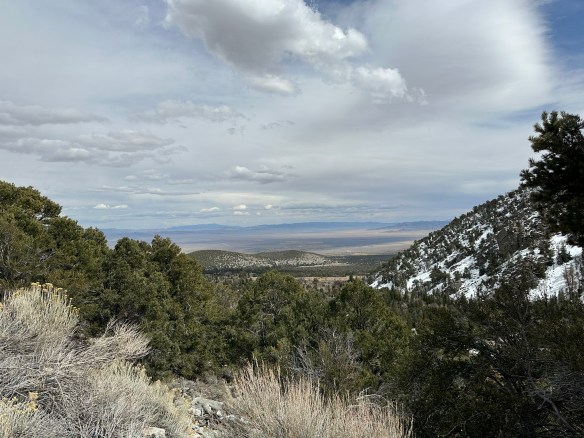
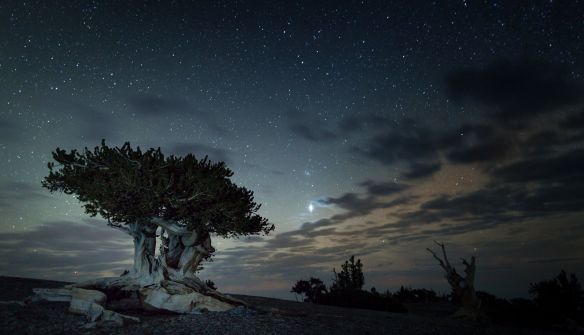
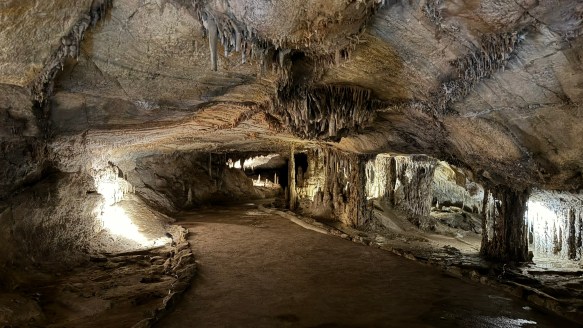
There are many things to do at Great Basin National Park. The ecosystem is diverse and plays host to 11 species of conifer trees, 73 species of mammals, 18 species of reptiles, 238 species of birds, 8 species of fish, and over 800 species of plants. The biodiversity ranges from desert valleys, mountain ranges, caves, a forest, an alpine environment, and even a glacier. And, if that weren’t enough, in 2016, Great Basin National Park was recognized as a a Gold Tier International Dark Sky Park by the International Dark Sky Association. This means the skies over Great Basin are some of the most pristine and clear night skies in the U.S. On a moonless, summer night, if the sky is clear, you may be able to see not just stars, but planets, satellites, meteors, the Milky Way, and the Andromeda Galaxy, all with the naked eye! Don’t forget, there’s also Lehman’s Cave to explore, hiking, and fishing…this park warrants a multi-day visit!
Accessibility: The park currently features two trails that are built to ADA standards and are accessible with a standard wheelchair. For information on all trails, go to their hiking page and for more specific information on ALL accessible areas in the park, go to the park’s accessibility page.
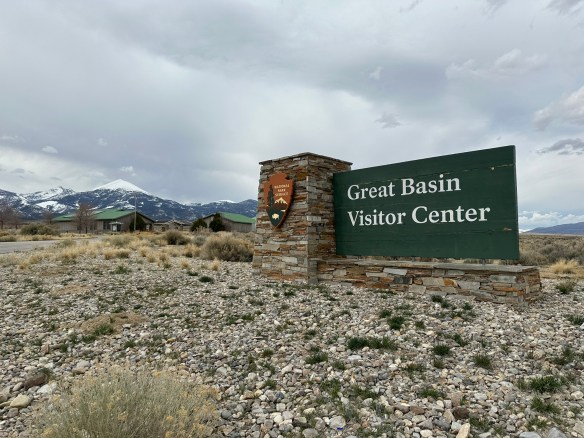
Great Basin National Park’s grounds are open 24 hours a day, year round to hiking, stargazing, and camping. The park’s Visitors Center is located just north of the town of Baker on the west side of NV Highway 487 and is open every day between the hours of 8a–5p. In the summer, the Great Basin Visitor Center is open daily. The Lehman Caves Visitors Center is located 5.5 miles up from the town of Baker, NV from 8a–5p. In the summer, Lehman Caves Visitor Center is open extended hours. Hours may change seasonally for both visitors centers, so make sure you check on their webpage before heading out. The Plan Your Visit page does a great job of letting you know what to expect during each season. It’s worth reading through it if you plan to visit outside of the summer months. Interested in stargazing and astronomy? The website’s Astronomy page highlights their ranger programs for all visitors and the associated rules.
MILE MARKER: Great Basin National Park has some of the most interesting, naturally occurring resources in the U.S. For example: Some of the bristlecone pines here are over 4,000 years old. Also, there’s a hidden glacier here! Despite being in the Nevada desert, the park has a tiny glacier tucked into the shadow of Wheeler Peak, the southernmost glacier in the U.S.
HIKE IT!: There are numerous hiking trails in Great Basin. The hiking page on their website does a fantastic job of breaking down hikes by location and/or by ability. They also have a downloadable map site with all the trails topographical maps as well as advice about hiking in winter. It’s a great way to plan your hike and what you’ll need for it before you get out there.
 Two Chicks with Hiking Sticks