Through Fields of Fire and Footpaths: Gettysburg National Military Park

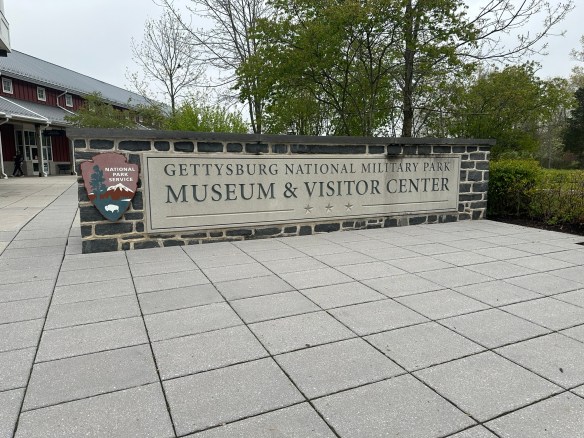
Photo by S. Resendez

Gettysburg is where the nation turned and where a battlefield became sacred ground. Gettysburg National Military Park preserves the site of the Battle of Gettysburg (July 1–3, 1863), the bloodiest battle ever fought on American soil and a turning point in the Civil War. More than 51,000 soldiers were killed, wounded, captured, or declared missing in just three days. The battle ensued across rolling farmland, rocky hills, orchards, and small town streets. The battle erupted almost accidentally when Confederate troops encountered Union cavalry near the town of Gettysburg, Pennsylvania. What began as a scouting expedition quickly escalated into a massive three-day engagement involving over 165,000 soldiers.

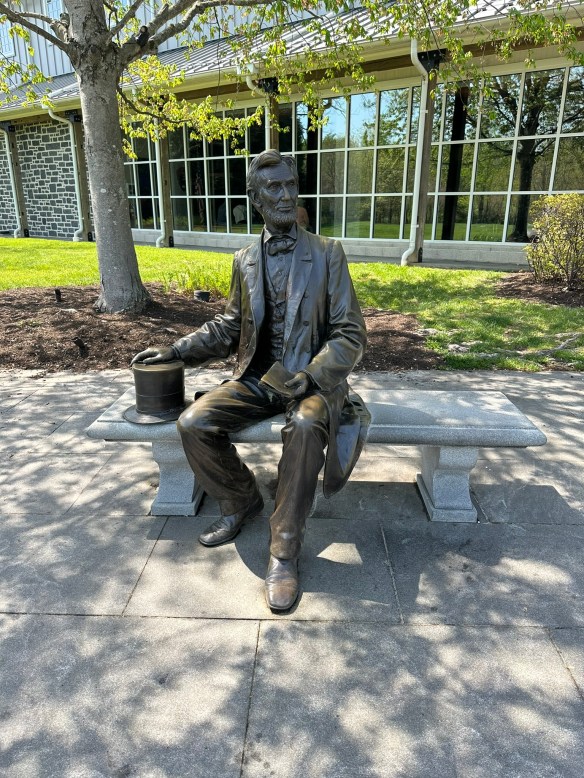
After the battle, local citizens worked to recover bodies and care for the wounded. A Soldiers’ National Cemetery was created for Union dead. It was here that President Abraham Lincoln delivered the Gettysburg Address in November 1863 — redefining the war as a struggle not just for union, but for equality and democracy.

Photo by S. Resendez

The Battle of Gettysburg is important for several reasons:

  • It Stopped the Confederate Invasion of the North–General Robert E. Lee hoped to win a major victory on Northern soil, potentially forcing peace negotiations. Instead, his army suffered devastating losses and had to retreat back to Virginia.
  • It Shifted Momentum Toward the Union–After Gettysburg, the Confederacy never again launched a full-scale invasion of the North. The Union gained confidence and strategic advantage.
  • It Redefined the Meaning of the War–Lincoln’s Gettysburg Address framed the war as a fight for equality and democratic ideals — not simply preservation of the Union.
  • It Became a Symbol of Sacrifice and Unity–Gettysburg represents the cost of division and the power of reconciliation — something visitors still feel walking the fields today.
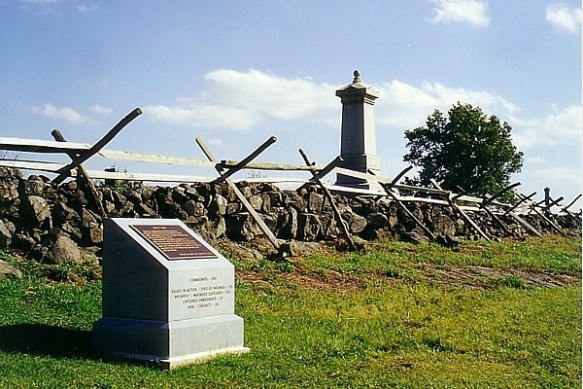
Stone wall on Cemetery Ridge
Photo courtesy of NPS

Today, the park protects over 6,000 acres, with more than 1,300 monuments, markers, and memorials, making it one of the most monument-dense historic landscapes in the world. Visitors can hike the same ridgelines and walk the same fields where Union and Confederate soldiers fought, often within feet of original stone walls, farm buildings, and cannon placements. It serves as a perfect junction for hikers and history lovers alike, it’s a rare place where the outdoors and American identity intersect.

Park hours for Gettysburg National Military Park are from sunrise to sunset. The battlefield and roads are open thirty minutes before sunrise to thirty minutes after sunset. Visitors can plan their visit and obtain a listing of sunrise and sunset times by day in Gettysburg, PA here. Visitor Center hours change by season so make sure you check the website for more detailed information.

MILE MARKER: Did you know Gettysburg almost became an amusement park?
In the late 1800s and early 1900s, parts of the battlefield were treated more like a tourist playground than sacred ground. There were trolley lines, picnic groves, dance pavilions, and even proposals for roller coasters and a Ferris wheel near key battle sites. Visitors could ride out to the battlefield for leisure outings, not reflection. It wasn’t until preservation groups and the federal government stepped in that large sections of the land were protected and restored to their historic appearance.

HIKE IT!: There are no hiking trails in the park but that doesn’t mean you won’t be getting your steps in. Places in the park like Gettysburg National Cemetery or taking a Gettysburg Battle Walk will make sure you get your exercise. Just check the weather and plan accordingly.

Land of Standing Stones: Discovering the Magic of Chiricahua National Monument

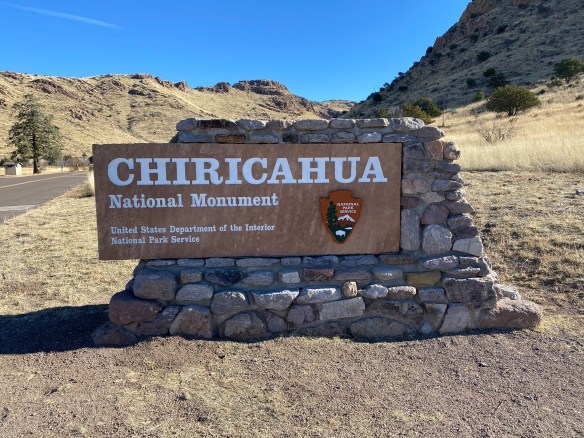
Photo by S. Resendez

We’re here again. We’re in a place settled long, long ago by people who migrated to North America thousands of years ago across the Bering land bridge or by sea. Their ancestral homeland was believed to be around modern-day Siberia/Mongolia, eventually settling across Alaska, northern Canada, and the American Southwest. Their migrations occurred in waves, with later groups moving south and east from an initial Alaskan settlement, adapting to diverse environments from subarctic forests to desert regions. These people are the Athabaskan people. We mentioned them in our episode about Canyon de Chelly.

As these people made their way down to what we now refer to as the Southwestern United States (between 1400 and 1500), the Chiricahua eventually settled in what is now southeastern Arizona, southwestern New Mexico, and northern Mexico in the Sonoran and Chihuahuan Deserts. The Chiricahua people are named after the Chiricahua Mountains in southeast Arizona. The Apache Indians were only one of the bands of Chiricahua Indians that evolved into different clans.

As it was, and still seems to be, the way of the United States to take what belongs to someone else (for more current information, see “Greenland”) the Apache Wars of 1861 culminated, after 24 years, in the creation of a reservation for the Chiricahua people that allowed them to live in relative peace until the death of Cochise, when the reservation was abolished and the people were forced to move to another reservation.

After the Chiricahua people were relocated, settlers and ranchers moved into the area and in the 1930’s, the Civilian Conservation Corp (CCC) came into the region and were responsible for the construction of many of the roads, parking areas, and trails. Many of the trails were built for recreation but some of them were designed specifically to allow access for firefighters.The Sugarloaf Trail, for example, has the dual purpose of providing fire lookout access as well as recreational opportunities. The Natural Bridge Trail was constructed for the sole purpose of firefighter access into Picket Park.

Photo by S. Resendez

Bonita Canyon Highway offers a beautiful 8 mile drive to Massai Point, the culmination of a road that was constructed by the US Forest Service in 1932. The road is a narrow mountain road with low hanging trees and small parking areas. If you’re hauling a trailer, your trailer must be disconnected to drive up through Bonita Canyon. Chiricahua National Monument is a “Dark Sky” park, so be prepared for some intense stargazing!

Chiricahua National Monument is located at 13063 E Bonita Canyon Rd, Willcox, AZ. The park is open 24 hours a day. Trails stay open for sunrise, sunset, and night sky viewing. Be aware of wildlife and use extreme caution. There is no entrance fee or pass required to enter. The visitor center, on the right 3.5 miles after the entrance, is open from 8:30 am to 4:30 pm. It has an information desk, museum, park film, and gift shop. It provides free maps, junior ranger booklets, and information.

Photo by S. Resendez

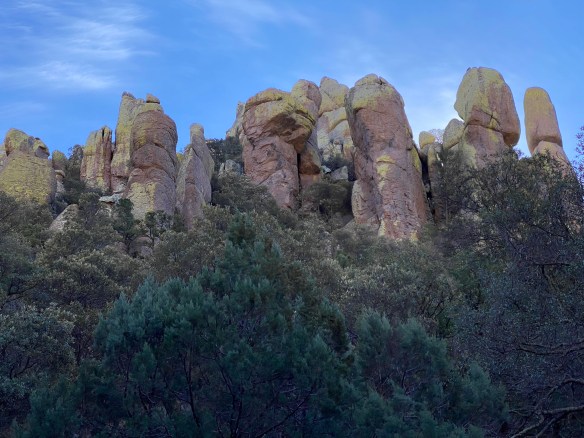
MILE MARKER: Chiricahua National Monument was formed by a single massive volcanic eruption about 27 million years ago. The Turkey Creek volcano released such an enormous ash cloud that the material hardened into rock, creating the towering hoodoos and balanced stones we see today. When you hike here, you’re walking through what was once a volcanic ash blanket—now sculpted into a stone forest by time and erosion.

HIKE IT!: Once again, the National Park’s website offers a great hiking page which breaks the hikes down into easy, moderate, and strenuous hikes. Five easy hikes about a mile or less will take you to some of the most scenic areas in the park! Don’t forget, though, there is elevation in this park so acclimate to the altitude by doing a short hike first!


Exploring the Cibolo Center for Conservation

Photo by S. Resendez

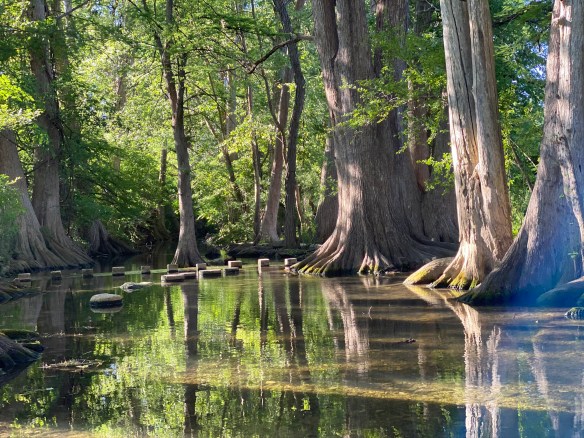
On our podcast, we’ve talked before about how the average person can make a difference in how our lands are cared for and conserved. You traveled with us to the Chihuahuan Desert Nature Center and saw how research, education, and conservation work cohesively. Now, let’s visit another beautiful area off Cibolo Creek in Boerne, Texas, that shows what a handful of people and a small city can do when they work together to preserve and conserve.

Photo by S. Resendez


In 1988, Carolyn Chipman Evans, her husband, Brent Evans, along with several friends, began advocating to restore and conserve a segment of Cibolo Creek. Gaining the support of the city of Boerne, the group brought the need for the conservation of their part of Cibolo Creek to the public and began a movement to create what eventually became the Cibolo Center for Conservation. With the purchase of the neighboring Herff Farm in 2007, and the creation of the Nest Nature School, the Center offers the local and surrounding community the opportunity to educate, hike, and garden. The Center provides a space for special events and exhibits, as well as a weekly farmer’s market. They serve more than 70,000 children, adults, and families a year.

Photo by S. Resendez

Cibolo Center for Conservation offers a plethora of outdoor learning programs for children, as well as opportunities for 18+ interns, educators, and adult education workshops for adults. Read all about it here.

Whether you’re visiting for the scenery, the wildlife, or a quiet escape into nature, Cibolo Creek Nature Center is a place that invites you to slow down and discover something new. Cibolo Creek Nature Center is located at 140 City Park Rd, Boerne, TX. Their visitor center hours are M–F from 9 am to 4:30 pm and the trail hours are from 8am to dusk, 7 days a week.

Photo by S. Resendez

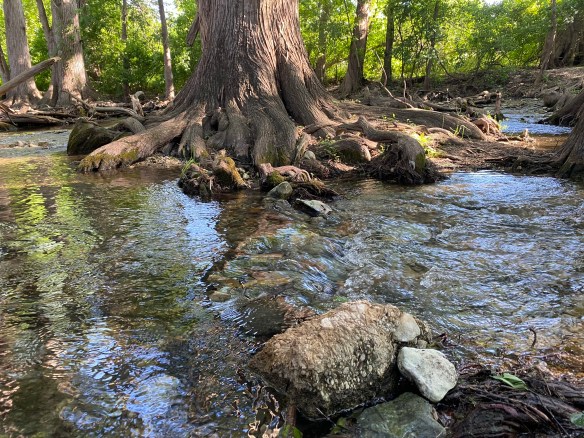
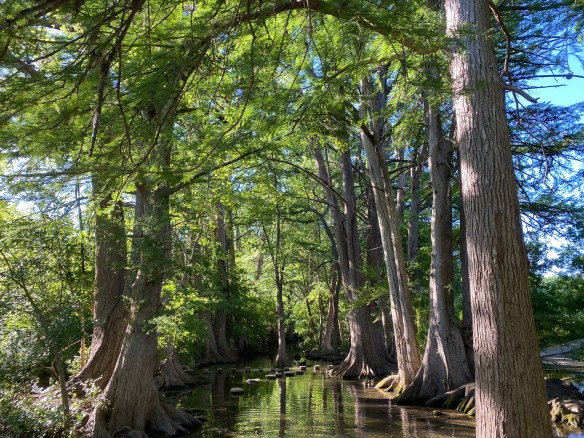
MILE MARKER: Many visitors don’t realize that Cibolo Creek Nature Center is more than just a beautiful place, it’s a site rich with history and biodiversity. Archaeologists have found evidence of human life here dating back over 10,000 years, and the preserve protects four distinct ecosystems within just a few miles of trail. From the shady creekside to the open prairie, every step offers a glimpse into the natural and cultural story of the Texas Hill Country.

HIKE IT!: The main trail in the park is the Prairie, Creekside, and Woodlands Trail Loop. There is a map at the center that shows how each section of the hike traverses through distinct ecological areas. There are several other trails and many of them can be combined to create a longer hiking experience if that’s what you’re seeking.