When East Met West: A Traveler’s Guide to Golden Spike National Historic Park

Photo by S. Resendez

America was moving west and it wasn’t an easy trek. As settlers began making their way into and across the United States, there was a push to move westward in the 1800’s. Gold had been discovered, Spaniards were making inroads and discovering land and an abundance of natural resources. Places like Fort Davis were providing a safe respite from the wild west but it was taking time for get from one end of the country to the other. Wagon routes and months-long sea voyages were slowing progress. Many leaders—businessmen, politicians, and military planners—began calling for a faster, safer way to connect the nation, a nation dreaming of speed and connection.

But the idea stalled for years because Congress couldn’t agree on where the route should run. Northern states pushed for a northern path; Southern states demanded a southern one. The political deadlock broke only after the Civil War began, when Southern representatives (who preferred a southern route) withdrew from Congress. Suddenly, the northern-backed plan had a clear path forward.

In 1862, President Abraham Lincoln signed the Pacific Railway Act, officially launching the transcontinental railroad. The government supported it with land grants and loans, while two companies—the Union Pacific (building west from Omaha) and the Central Pacific (building east from Sacramento)—took on the construction. Their lines met in 1869 at Promontory Summit, Utah, forever transforming travel, trade, and the American West.

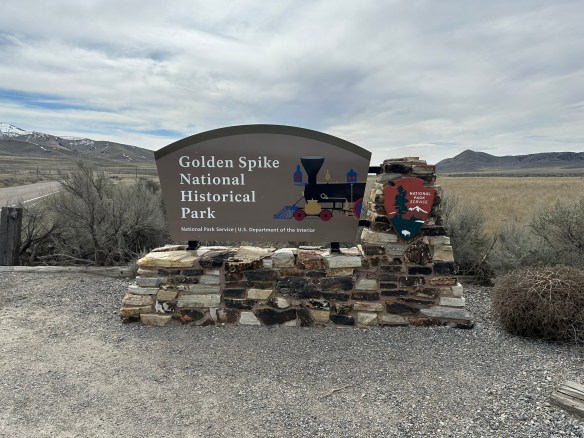
 On May 10, 1869, officials from the Central Pacific Railroad and the Union Pacific Railroad met at PromontorySummit, in Box Elder County, Utah, to drive the final, ceremonial spikes, linking the eastern and western United States by rail. In 1965, the site of the last spike on the transcontinental railroad was designated a National Historic Site. In March of 2019, the park’s designation was changed from a historic site to a historic park, just in time to for the commemoration on May 10, 2019, as America celebrated the 150th anniversary of the completion of the First Transcontinental Railroad and recognizing the historic site as the Golden Spike National Historical Park.

Photo by S. Resendez

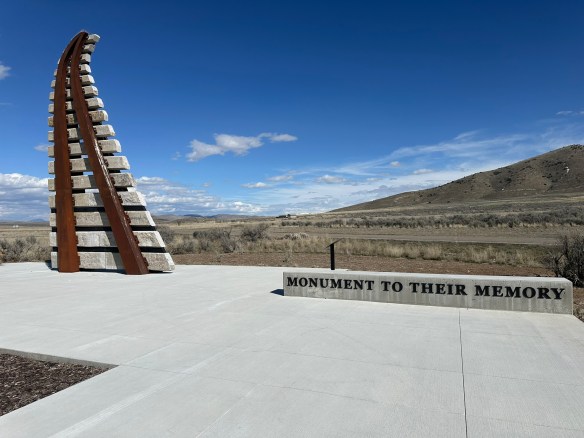
While connecting the railways was indeed a giant leap forward for the United States, it should be noted that these strides were made on the backs of several groups of people. Native Americans were already settled in the west and the construction of the railroad caused the people from 15 tribal nations to watch their homes and livelihood be destroyed with the advancement of the railroad. Irish immigrants, who came seeking work during potato famine in the mid-1800’s, were instrumental in helping build the railroad despite religious discrimination and.a language barrier. And Chinese immigrants, who were reluctantly hired after a critical shortage of labor was created due to gold strikes, were responsible for a great majority of the hardest labor that went into building the transcontinental railway. Chinese workers were often given tasked with working in the most dangerous conditions. Tunnels in the Sierra Nevada Mountains that had to be bored into solid granite for the railroad, rockslides, explosions, exposure, avalanches, and violent clashes claimed the lives of many of the Chinese workers. It is estimated that over one thousand Chinese laborers died building the CPRR. At the 1869 Golden Spike ceremony, not a single Chinese laborer was invited or mentioned, despite their indispensable role.

Central Pacific Railroad Jupiter
Photo courtesy NPS

Today, Golden Spike National Historical Park offers a variety of things to do during your visit. Commemorative events, seasonal events, nature, and hiking are all available at this park. There are approximately 55,000 visitors a year and the visitor’s center is open seasonally, at various hours. Please check the website for specific information before your visit. The physical address is 6200 North 22300 West, Promontory, Utah. It is approximately 30 miles west of Brigham City. The park is 2,735 acres of land surrounding a 15 mile stretch of the original Transcontinental Railroad. There is only one paved road coming in to the visitor’s center.

MILE MARKER: Did you know that the famous golden spike wasn’t hammered into place at all—it was gently tapped, lifted back out, and sent home, while the real work of joining the rails happened quietly behind the scenes.

HIKE IT!: There is a 1.5 mile trail called the Big Fill Loop Trail. It provides a beautiful view of the Promontory Mountains, the Great Salt Lake, and the Wasatch Front. Visitors can walk along the original grades of the Central Pacific and Union Pacific railroads and still see drill marks from the tools used to create the tracks.

Wander the Petrified Wild at Petrified Forest National Park

Photo by S. Resendez

Imagine yourself in some open grasslands…the weather is humid and rainy. You can see that there’s a lush, beautiful forest nearby and in the river, there are large, expansive, trees growing in and around the river bottoms. The land is verdant and green. You’re actually standing in a flood plain. There are animals like wooly mammoth and giant bison roaming the area. This is the supercontinent Pangaea during the Late Triassic Epoch, over 225 million years ago. What we now recognize as the southwestern part of the United States.

Photo by S. Resendez

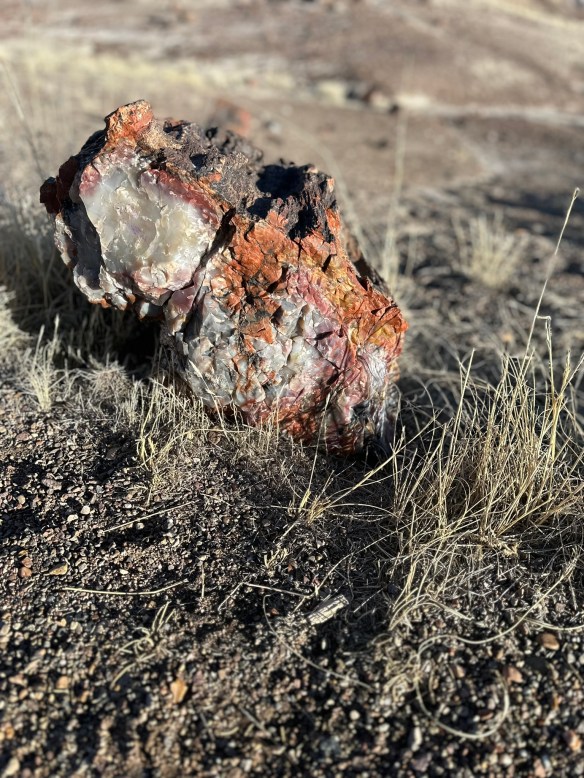
Over millions of years, as the continents moved, the land tilted and uplifted, and the climate changed significantly, transforming the environment from a tropical basin to an arid plateau. The trees in that forest eventually fell and became buried in the biorich sediment where mineral-rich water replaced the tree’s organic structure with minerals, and turned them into petrified logs. The gradual uplifting of the land (starting about 60 million years ago) created stress that caused the brittle, crystal-filled logs to fracture like glass rods, creating the segmented appearance. Continual erosion from wind and water eventually exposed the fossils and sculpted the surrounding badlands and colorful Painted Desert formations, revealing the landscape we see today.

The Paleoindian people lived in, and around, the area of the petrified forest and as the climate and environment changed, began to settle the area as evidenced by the pithouses that were built into the land to mark the need for more permanent housing. By this time, the geographical area resembled what we recognize today as the Southwest. By the 1500’s, Spanish explorers began making inroads in search of routes along the Rio Grande and the Pacific Coast. After becoming a part of the U.S. territories in the 1800’s, the army continued to seek routes to the Pacific coastline and in doing so, came across what would eventually become the Petrified Forest National Park.

The Petrified Forest is located within the greater Painted Desert. A variety of animals call this area of the U.S. home, including amphibians such as salamanders and toads; birds; insects; mammals such as fox, coyote, deer, and rabbits; and reptiles like lizards, skinks, horned toads, and snakes. There are also several hundred species of plants and trees throughout the park. Research and dig sites are a constant in the Petrified Forest as scientists continue to learn and provide scientific information about the park to park visitors. This park is best known for its Triassic fossils.

Petrified Forest National Park is open year round except for Thanksgiving and Christmas. Painted Desert Visitor Center and Rainbow Forest Museum & Visitor Center hours are from 8am to 5pm and the Painted Desert Inn National Historic Landmark Hours are from 9am to 4pm. Note: Arizona does not observe Daylight Saving Time, remaining on Mountain Standard Time year-round. For example, in the summer months, during Daylight Saving Time, the time in Arizona and California is the same, with New Mexico and the Navajo Reservation one hour ahead. As usual, always make sure you check ahead in regards to weather and possible closures. This is a pet friendly park!!! Dogs (on leash) are allowed on the trails and there’s even a dog park available. Stop by one of the Visitor Centers and get a BARK Ranger certificate for your furry friend!

Photo by S. Resendez

You can drive through the park in about an hour BUT there are plenty of short hikes that will allow you to see ancient villages, petroglyphs, giant logs, and petrified wood. This is the perfect park to see a lot with minimal physical investment.

MILE MARKER: Did you know Petrified Forest protects one of the richest Triassic fossil sites on Earth—not just fossilized trees, but early dinosaurs and evidence of some of the planet’s oldest wildfires? This park is far more alive than it looks!

HIKE IT!: There are several hiking trails of short to medium length available to hike in the Petrified Forest. The website’s trails page does a fantastic job of describing the trails and in giving you excellent insight into grades, cross slopes, and trial widths. Click on the link for the details.


Exploring the Cibolo Center for Conservation

Photo by S. Resendez

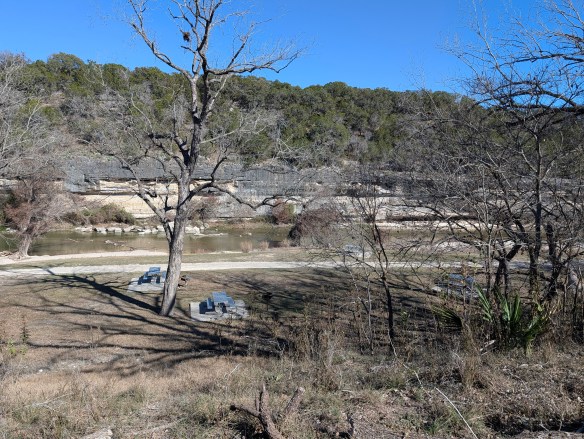
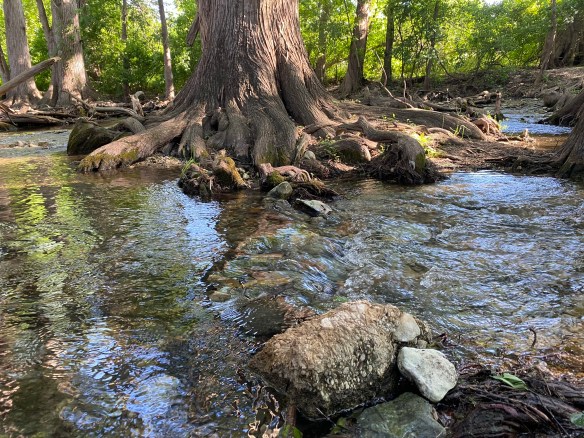
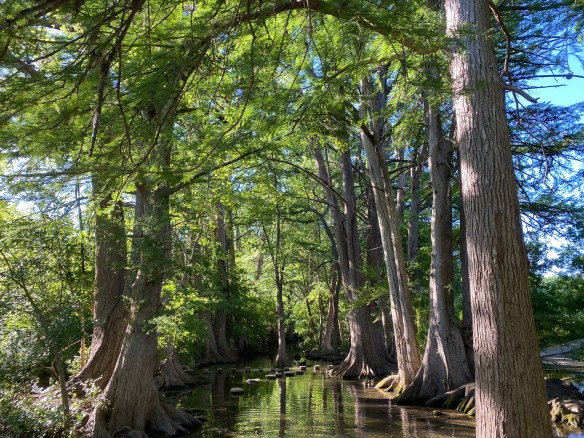
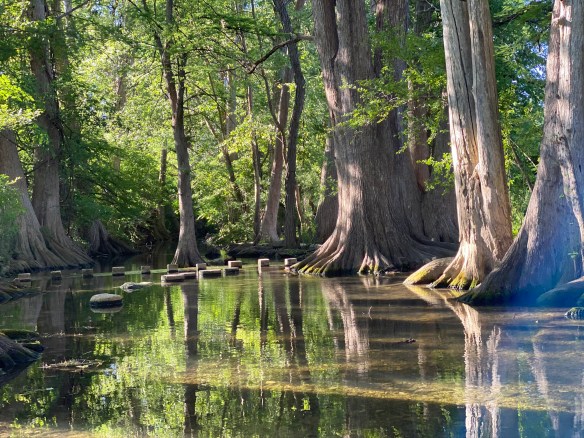
On our podcast, we’ve talked before about how the average person can make a difference in how our lands are cared for and conserved. You traveled with us to the Chihuahuan Desert Nature Center and saw how research, education, and conservation work cohesively. Now, let’s visit another beautiful area off Cibolo Creek in Boerne, Texas, that shows what a handful of people and a small city can do when they work together to preserve and conserve.

Photo by S. Resendez


In 1988, Carolyn Chipman Evans, her husband, Brent Evans, along with several friends, began advocating to restore and conserve a segment of Cibolo Creek. Gaining the support of the city of Boerne, the group brought the need for the conservation of their part of Cibolo Creek to the public and began a movement to create what eventually became the Cibolo Center for Conservation. With the purchase of the neighboring Herff Farm in 2007, and the creation of the Nest Nature School, the Center offers the local and surrounding community the opportunity to educate, hike, and garden. The Center provides a space for special events and exhibits, as well as a weekly farmer’s market. They serve more than 70,000 children, adults, and families a year.

Photo by S. Resendez

Cibolo Center for Conservation offers a plethora of outdoor learning programs for children, as well as opportunities for 18+ interns, educators, and adult education workshops for adults. Read all about it here.

Whether you’re visiting for the scenery, the wildlife, or a quiet escape into nature, Cibolo Creek Nature Center is a place that invites you to slow down and discover something new. Cibolo Creek Nature Center is located at 140 City Park Rd, Boerne, TX. Their visitor center hours are M–F from 9 am to 4:30 pm and the trail hours are from 8am to dusk, 7 days a week.

Photo by S. Resendez

MILE MARKER: Many visitors don’t realize that Cibolo Creek Nature Center is more than just a beautiful place, it’s a site rich with history and biodiversity. Archaeologists have found evidence of human life here dating back over 10,000 years, and the preserve protects four distinct ecosystems within just a few miles of trail. From the shady creekside to the open prairie, every step offers a glimpse into the natural and cultural story of the Texas Hill Country.

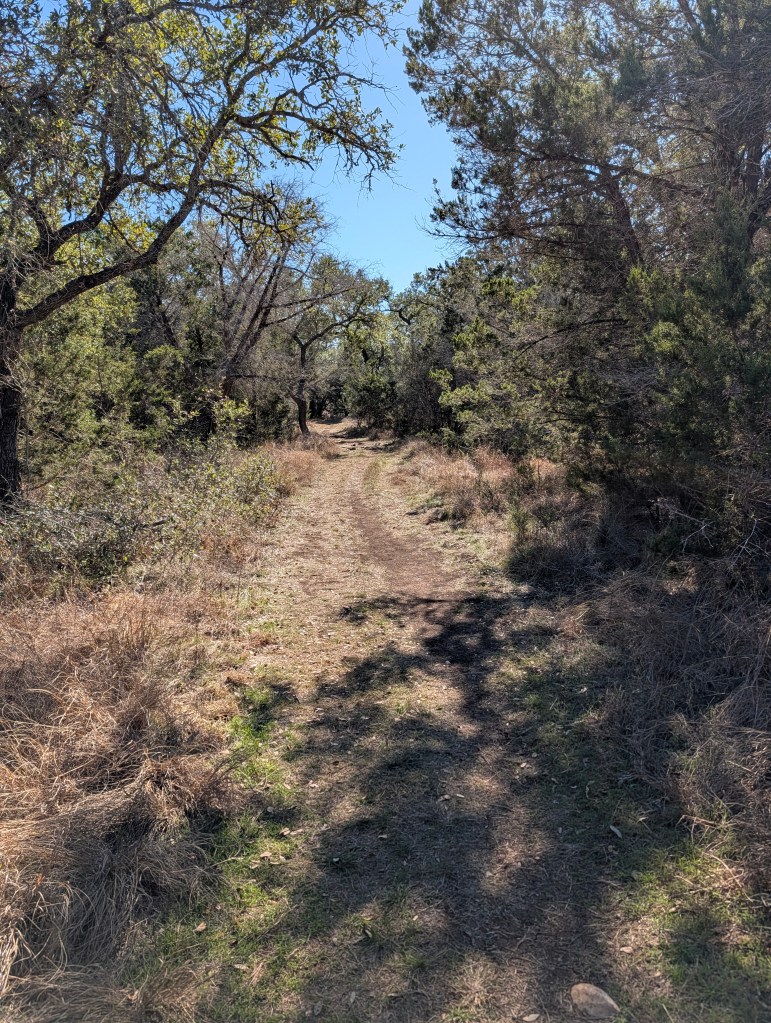
HIKE IT!: The main trail in the park is the Prairie, Creekside, and Woodlands Trail Loop. There is a map at the center that shows how each section of the hike traverses through distinct ecological areas. There are several other trails and many of them can be combined to create a longer hiking experience if that’s what you’re seeking.

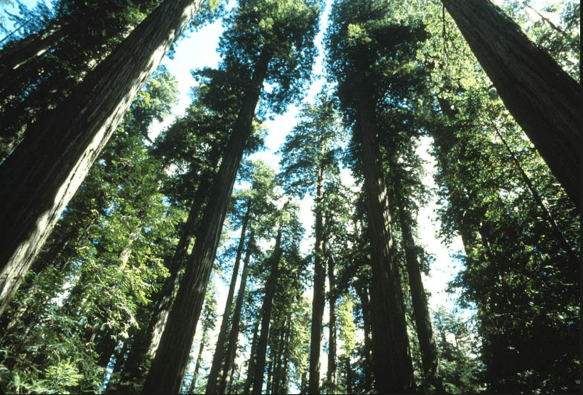
Redwood National Forest: Secrets of the Tallest Trees on Earth

Image courtesy of NPS

When people think of the Redwood National Forest, the first thing that comes to mind is the trees. Redwood National Forest is home to some of the tallest trees on earth, but the landscapes in and around the forest consist of more than just giant trees. Oak woodlands, rivers, prairies, and coastline make up the surrounding landscape. But we get it; you go for the trees. We all go for the trees…but there’s so much more!

Redwood National and State Parks is unique because the National Park Service (federal) and California State Parks (state) jointly manage the parks. Approximately 55% of the park is under federal management: the federal government, through the National Park Service (NPS), owns and manages a portion of the parkland, which was initially designated as Redwood National Park in 1968. The remaining 45% of the park is managed by the state of California, through California State Parks. California owns and manages the land in three separate state parks that are part of the larger, cooperatively managed unit: Del Norte Coast Redwoods State Park, Jedediah Smith Redwoods State Park, and Prairie Creek Redwoods State Park. In 1994, the NPS and California State Parks formed a cooperative management agreement to manage the parks as a single unit, maximizing resource protection.

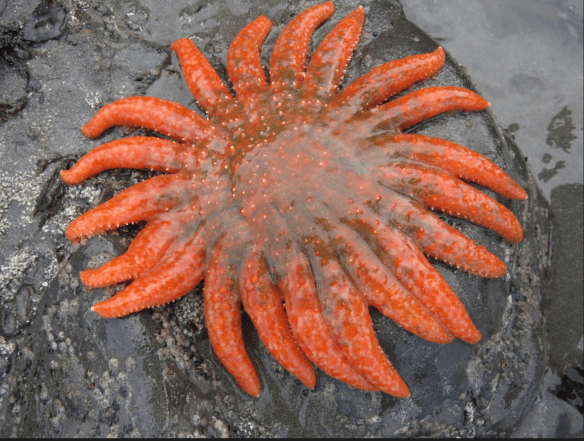
Sea Star on Rock Photo courtesy of NPS

The abundance of ecological diversity in the Redwood Forest led to it being designated a UNESCO World Heritage Site in 1980. The diverse species of animals range from birds, land mammals, marine mammals, fish, and tide pool creatures such as sea stars and sea anemones. The Redwood Forest is also home to several threatened and endangered species such as the Northern Spotted Owl and the Steller Sea Lion. Redwood National and State Parks work hard to preserve, monitor, and safeguard fish and wildlife habitats to support recovery.

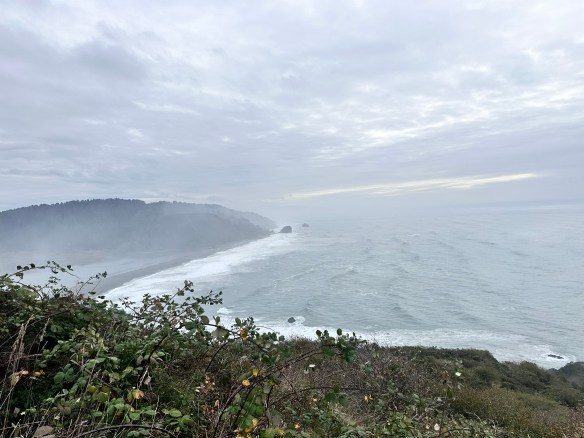
Redwood National Park is a total of 139,000 acres, or about 217 square miles, when combined with the three state parks (Jedediah Smith, Del Norte Coast, and Prairie Creek). Without the state parks, the national park itself is 131,983 acres, or 206 square miles, which includes about 40,000 acres of old-growth forest. The entire park extends for 35-60 miles along the northern California coastline.

Redwood National Forest Coastline Photo by S. Resendez

The Redwood National and State Park(s) is open year round but the Visitor’s Centers operate on a seasonal schedule. Check the website for information on hours and times. Cell service is limited and while GPS works, it often offers confusing directions. plan ahead by:

  • Carrying a physical map, especially if venturing into remote areas.
  • Using official park maps, available at visitor centers and on the park’s website.
  • Using road signs within the park rather than GPS apps, which may misdirect you.

It’s also a good idea to check conditions before heading out because heavy fog might prevent you from seeing some of the sights you’re planning to visit. Luckily, the NPS site has a page made just to let you know what current conditions are at the park at all times. Check that page right before you head out for alerts, road closures, and trail information.

MILE MARKER: Did you know the redwoods in California’s Redwood National and State Parks are not just the tallest trees on Earth — they’re weather-makers too? These ancient giants capture fog from the Pacific, absorbing moisture through their needles and creating their own microclimate. It’s a self-sustaining forest, where the trees literally drink from the clouds.

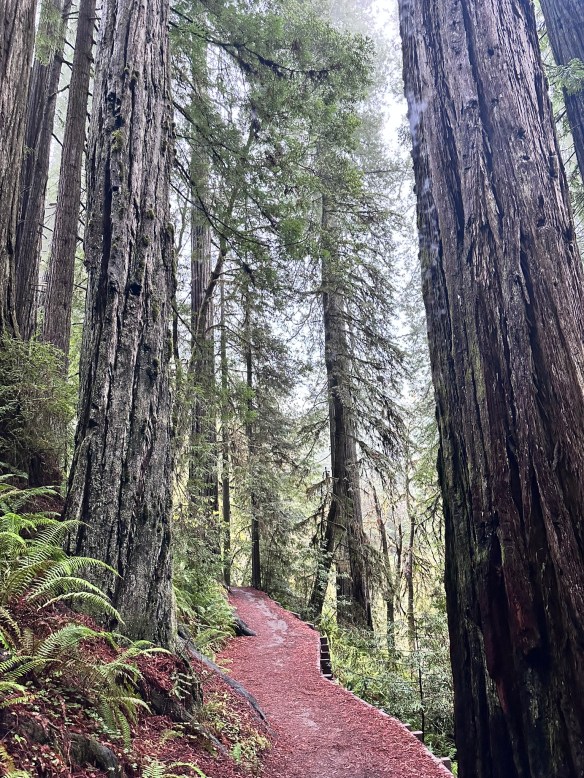
Hiking Trail in the Redwood Forest Photo by S. Resendez

HIKE IT!: Once again, the National Park Service website for The Redwood National Forest and State Parks has done an excellent job helping you to plan your best hike. Their web page breaks down hikes by time and region. From short walks to all-day hikes, they’ve got you covered. Make sure you check out the current conditions page before you head out, then get your sticks and go!

Reintroducing Ourselves: Meet the Two Chicks!

Thanks for joining us at Two Chicks with Hiking Sticks. We’ve been picking up new subscribers on YT so we thought it would be a good time to take a moment to reintroduce ourselves. Our goal with our all of our content, podcast and blog, is to entertain and educate about the outdoors through experiences that will empower us to explore the rich intersections of culture, history, and the natural world.

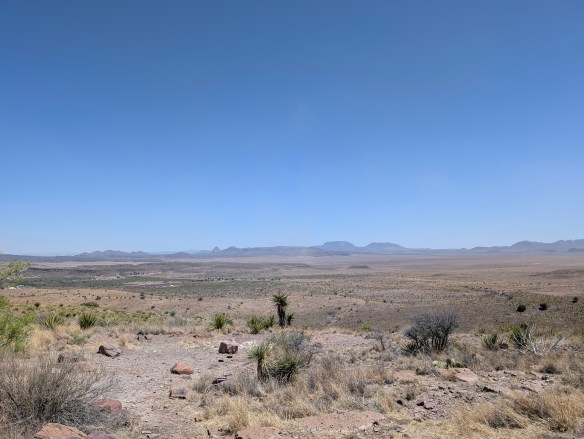
Chihuahuan Desert Photo by M. Gonzalez

We also think we’re at a good age to encourage other people who have had a long time urge to get into the outdoors and do some hiking but have always felt that perhaps they couldn’t hike long hikes, or maybe they’re recovering from an injury and aren’t sure they’re ready to hike. Or maybe they’re just afraid to get started. If any of those statements sound familiar, you’re in the right place!

We firmly believe that hiking is for everyone! Being outdoors is good for all of us. It’s important to touch grass now and then. To know that if things get too hectic in our daily lives, a walk or hike amongst the greenery can help us all to breathe. Being outside helps bring our blood pressure down. It brings down our stress levels. It helps us to focus. It grounds us.

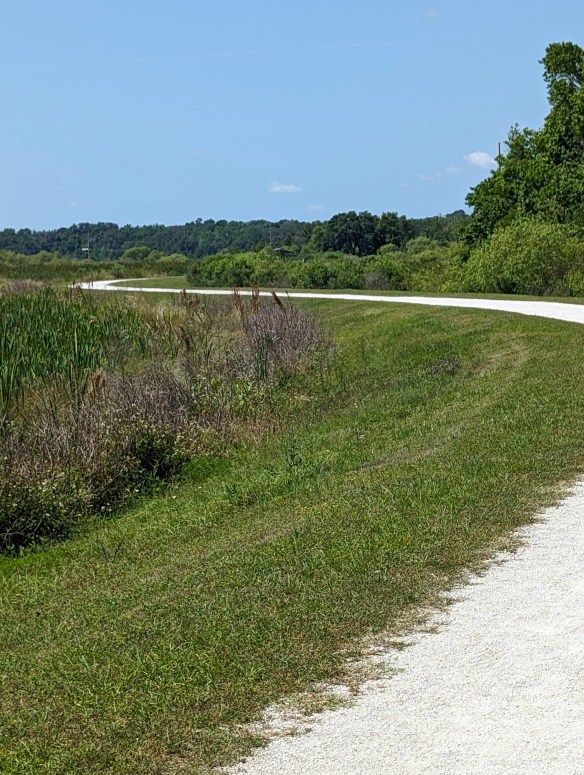
Sweetwater Wetlands Park Photo by M. Gonzalez

You don’t have to hike miles and miles to gain the benefits of hiking and being outdoors. Research published in 2019 in the Journal of Positive Psychology provides evidence that subjects who spent just five minutes in a natural environment showed significant increases in positive emotions compared to participants who sat in a windowless room.

It’s not only how long a single outing is, but also how often you get out. Shorter, repeated exposures (interval exposure) can bring benefits. Even 10 minute exposures, if repeated over time, show positive effects. And here’s something interesting…these same studies also show that very long durations (hours) don’t always yield proportionally greater benefits, depending on the setting and how strenuous the activity is. This means that short intervals outside can yield the same, if not better, results than long, extended activity!

Comanche Lookout Park Photo by M. Gonzalez
  • If you go for a hike (or spend time in nature) just once, even 10-15 minutes will likely give you a mental boost: better mood, lower stress.
  • More frequent shorter outings may be as or more helpful than infrequent long ones.
  • Hiking regularly (say, one or more hikes/week) is better than one long hike then many days indoors.

We take you to visit city, state, and national parks. We talk about the culture and the history surrounding them, then we talk about the hikes. And, we have some laughs as we do it. So, what are you waiting for? Grab your hiking sticks, join the Two Chicks, and go “Hike Your Own Hike!”

What’s in Our Hiking Packs?!

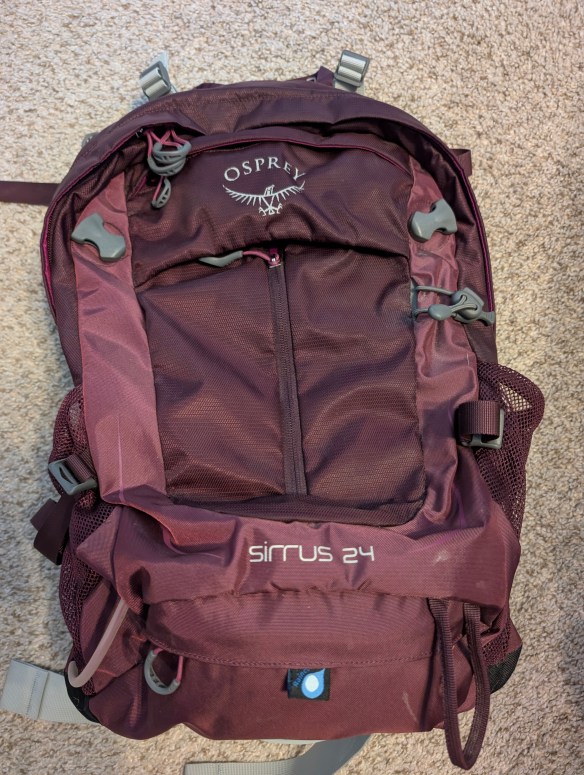
Photo by M. Gonzalez

Have you ever wanted to know what other hikers carry in their hiking packs? This is your chance to take a quick peek into the backpacks of the Two Chicks.

We’ll talk a bit about what we carry and why we carry it. We hope you enjoy this podcast and we hope it inspires you to do some hiking!

Don’t forget to check out our Hiking Information page for lots of downloadable checklists you can use for your next hike. Also, what’s in your pack? Drop a quick comment down below and tell us what you carry and what’s the one thing you won’t leave behind when YOU go hiking.

And don’t forget to hike your own hike!

Camino Real de los Tejas National Historic Trail: The Royal Road of Texas

We’re covering new ground today as this is our first time exploring an NPS National Historic Trail. Based on the NPS definition of what denotes a National Historic Trail, we learn that a National Historic Trail is a “long-distance route that follows and commemorates a historic path of travel that changed the history and character of the U.S.” Today these routes offer opportunities to visit surviving sites, trail segments, and defining places of history as we learn about the diverse stories they tell. According to the NPS site, there are currently 19 trails that range from 16 miles long to a little over 5,000 miles long. For more information about all the trails, click on the link here.

Map courtesy of NPS

Beginning in Mexico City and winding its way through Texas and up into Louisiana, the Camino Real de Los Tejas covers approximately 2,600 miles. This isn’t a “hikeable” trail by definition, rather it should be considered as a chance to follow the historical footsteps of the people who traveled across countries and through inhospitable lands to begin settling the areas we now recognize as Texas and Louisiana.

Spanish Missions in Texas Photo by M. Gonzalez

Because we’re writing this from our home base in San Antonio, it’s easy to talk about where the trail leads us from here, but before it got to San Antonio, the trail meandered up from Coahuila, Mexico, near the Rio Grande, to Laredo, Texas, in and around Goliad, Texas (where the Camino Real de Los Tejas museum is located), and up through Victoria and Cuero. From here, the trail veers back towards San Antonio, or continues on to Bryan, Texas. There are also documented starting points, once the border was crossed, in Eagle Pass up to San Antonio. From San Antonio, the road continued on through New Braunfels (which later became a German settlement), up to San Marcos, to Austin or towards Bastrop (home of the Lost Piney Woods). From there, the branches seemed to gather near Crockett and continue on towards Nacogdoches and on towards Louisiana. The Camino Real de Los Tejas split or combined according to the seasons. If the weather affected the planned route, the way could be rerouted to avoid flooded areas or other hazards along the way.

There are several missions along this corridor, some missions having been moved from other areas closer to the Gulf of Mexico, and rebuilt to follow the San Antonio River, going east towards Louisiana or west towards California. In this part of Texas, the most famous missions in and around this area are, arguably, the San Antonio Missions National Historical Park, a UNESCO World Heritage site. However, other missions pepper the way along the Camino Real, such as Mission Nuestra Señora del Espíritu Santo de Zúñiga in Goliad State Park.

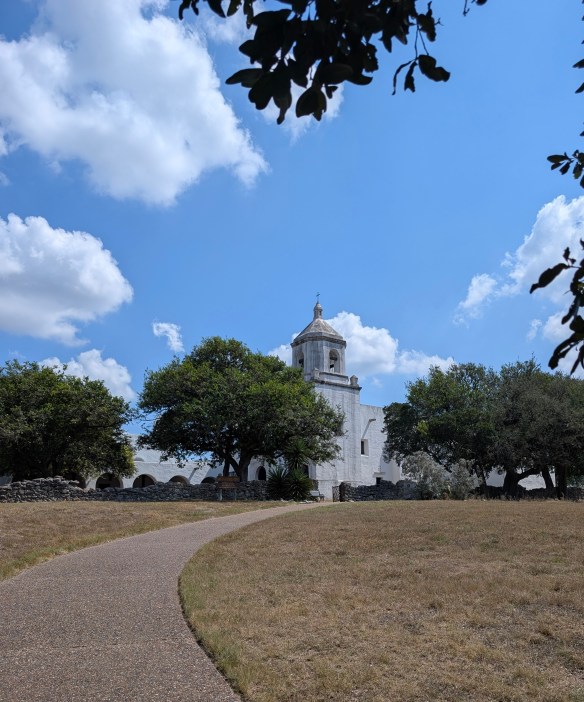
Mission Nuestra Señora del Espíritu Santo de Zúñiga Photo by M. Gonzalez

This amazing spot along the Camino Real showcases the work of the CCC (Civilian Conservation Corp) which was instrumental in building, conserving, and restoring a variety of buildings in and around Texas. While Mission Espiritu Santo was established in the mid-1700’s, it was the fourth mission with the same name and after several relocations, found its final home in the area known as La Bahía, which later became known as Goliad, Texas. As time passed and the mission was no longer needed, Franciscan Priests finally closed this mission in 1830.

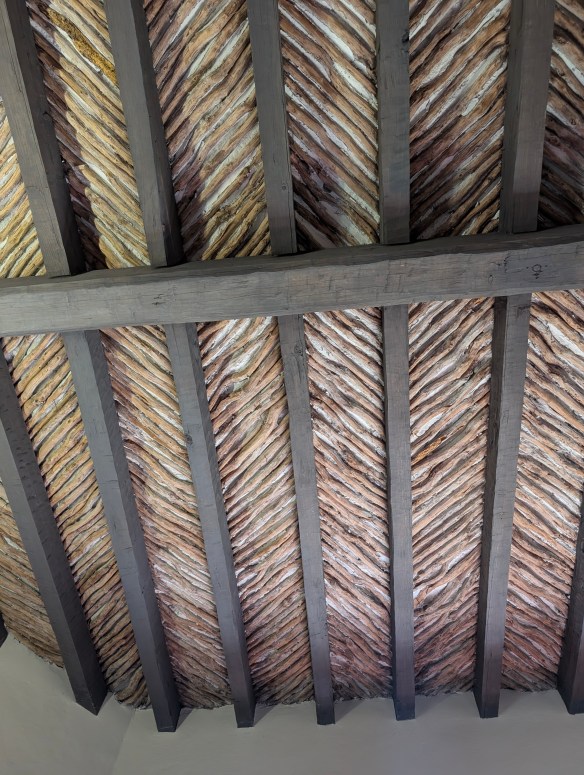
Between 1933-1942, the men of the CCC followed the plans to meticulously reconstruct the mission under the direction of a young architect by the name of Raiford Stripling. But before they would begin their project, they had to work on a “beginner” project in order to ensure that everyone understood the methods used to build the original mission in the 1700’s. In order to practice, they set about making a cottage for the park’s “superintendent to be”. In building this cottage, the men of the CCC could practice their brick making skills, along with learning to work with native materials, and making latilla ceilings (a traditional Southwestern design element consisting of peeled branches or small pieces of wood (latillas) laid between beams (vigas) to create a rustic, decorative ceiling). They learned how to hand carve large, ornate doors and forge iron hinges and once the cottage was finished, they understood what needed to be done to recreate the actual Mission de Espiritu Santo.

Latillas and Vigas Photo by M. Gonzalez

The Mission Nuestra Señora del Espíritu Santo de Zúñiga is the highlight of Goliad State Park and rightfully so. This mission, reconstructed on top of the its original 1749 foundation and wall remnants, is a testament to architecture and history as we make our way along the Camino Real de Los Tejas on the way to Louisiana.

If you’re interested in learning more about the Royal Road or following in the path of long ago Spanish settlers, look here for a FREE downloadable checklist of places to visit along the Camino Real de Los Tejas.

But there’s more to Goliad, Texas than meets the eye! We’re not done with our stop here just yet because in the midst of traveling this royal road through history, we also find ourselves in the heat of the battle for Texas independence! We’re going to look at, and talk about, flags you might not have known even existed! Stay with the Two Chicks for more adventures in Goliad, Texas!

MILE MARKER: A staircase, carved from two logs, could be placed in tight spaces that might have otherwise only had room for a ladder. Known as “Escaleras de Madera” or Staircases of Wood, they were also sometimes referred to as “Witches Staircases” as folklore denotes the stairs were designed to prevent witches from climbing them.

Escalera de Madera Photo by M. Gonzalez

HIKE IT!: There is a paved trail that runs through the park and connects the Presidio La Bahía to Goliad State Park and continues on towards downtown Goliad. Within the park, there is a trail that follows alongside the San Antonio River. It’s easy to park in the parking lot at the state park and walk the trail which is relatively flat and accessible. There are also hiking trails at the Medina Valley Natural Area. This area, just south of San Antonio, was part of the Camino Real de Los Tejas and there are some lovely trails to hike along the Medina River.

“Which Hiking Bag Fits Your Adventure Style?”

Photo by S. Resendez

Join us this week for a quick look at different types of bags you can use for different hiking situations. And while you’re planning your hike, don’t forget to visit our Hiking Information page for our FREE downloadable hiking checklists!

We’re not going to recommend any particular style or brand, we just want you to know about some of the options available to you as you consider your next hike. How long will you be hiking? Will the weather be hot or rainy? Will you be hiking into a particular destination or are you just planning to meander? Will you be in the middle of nowhere or will you be close to places where you can purchase extra water or snacks?

Once you consider all these things, then consider what king of bag you may need to hold all your gear. Do you just need something for your water, your snack bar, and your chapstick? Do you need to pack a rain jacket, a puffy jacket, food, and water? Do you just need water and a small first aid kit? This episode will help you choose the right bag for the right hike.

Support the Two Chicks!

Hello friends and fellow lovers of nature!

**QUICK UPDATE for all who were asking. If you’re looking for a t-shirt, you pick the design then Zazzle allows you to choose your t-shirt style, quality, size, and fit. So you basically pick the fit, size, and material quality. If you have any other questions, there is a way to leave messages on Zazzle or you can always drop a comment here. Thanks!**

We really appreciate your support over these last few months. We’ve had comments from several of you asking about merchandise and we heard you!

The Two Chicks with Hiking Sticks storefront is now open and we’d love it if you would consider supporting our endeavor to inform and educate about our cultural, historical, and natural world by buying a t-shirt or sticker or pin to help spread the word.

If you see something you like on the storefront but would like it more personalized, send a direct message and we’ll do our best to accommodate your request! Thank you!

Trail Mix #2

Got questions? We might have some answers!! Tune in for a short chat about questions or comments some of you have mentioned either on our Facebook Page, YouTube, or Instagram.

This episode, we’ll be discussing…

  • What’s the difference between walking and hiking?
  • What is your favorite small park?
  • Would we ever consider doing guided hikes?
  • What’s the difference between an NPS Park Store and an affiliate store?
  • Can you take things from National Parks?
  • Who decided gold was the standard of wealth back in the gold rush days?

If you have any other questions or comments, feel free to write them below. If you let us know, we’ll hand out some more trail mix in a future podcast. Thanks for listening!