Created by Congress in 1899 and later managed by the National Park Service, Vicksburg National Military Park was designed to preserve one of the most decisive campaigns of the American Civil War. We’ll explore why this battlefield was considered so significant that it became one of the earliest preserved military parks in the United States and how its mission has evolved from battlefield preservation to broader cultural interpretation. This space wasn’t just saved for its military importance, it was saved because what happened here reshaped a nation.
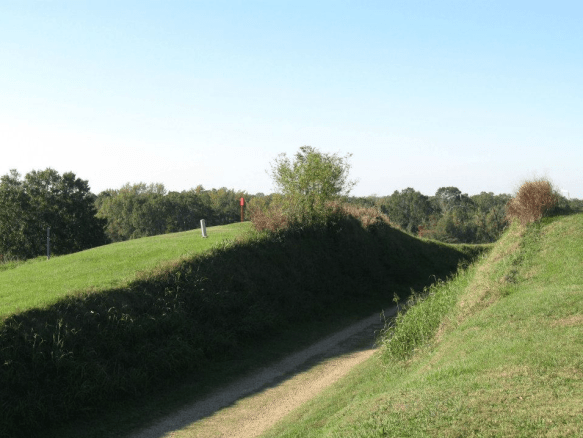
Vicksburg was the site of a siege that lasted 47 days in the summer heat of 1863. Ulysses S. Grant orchestrated a bold campaign that ultimately split the Confederacy in two. It is up to us, as visitors, to imagine life during war and what siege warfare meant…the exhaustion, the hunger, the civilians sheltering in caves carved into clay hillsides. This wasn’t just strategy. It was survival for all involved. It was a test of endurance, strategy, and survival. Vicksburg National Military Park has preserved earthworks, reconstructed forts, and more than 1,300 monuments honoring both Union and Confederate soldiers. These monuments include the restored ironclad gunboat USS Cairo, the first U.S. warship sunk by a torpedo and later recovered from the Yazoo River giving visitors a rare glimpse of Civil War naval warfare. In the park, Vicksburg National Cemetery is the final resting place of over 17,000 Union soldiers, making it one of the largest national cemeteries in the country.
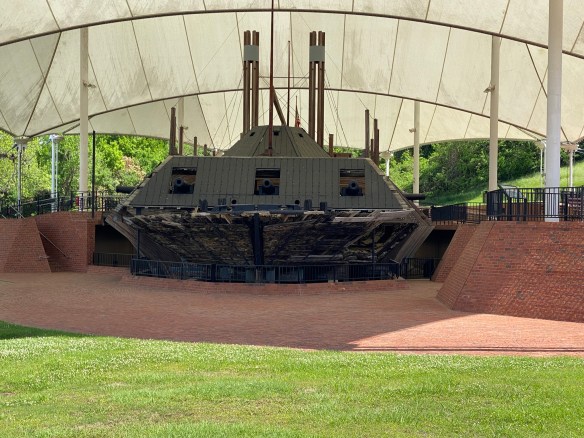
The Park District Visitor Center is open 8:30 am to 4:30 pm Wednesday through Sunday. Tour road is open from 8:30 am to 5 pm daily with last vehicle entry at 4:40 pm. Public restrooms are open at the Visitor Center and USS Cairo 7 days a week. Park grounds are open sunrise to sunset daily. They are closed Thanksgiving, Christmas Day, and New Year’s Day. The USS Cairo outdoor exhibit area including the ironclad itself is open 8:30 AM to 4:30 PM daily. The USS Cairo Museum is open 7 days a week from 8:30AM till 4:30PM. Make sure to check the website for closures and other updates. This park offers Living History programs and Ranger programs. Check the website’s calendar for further information on these programs.
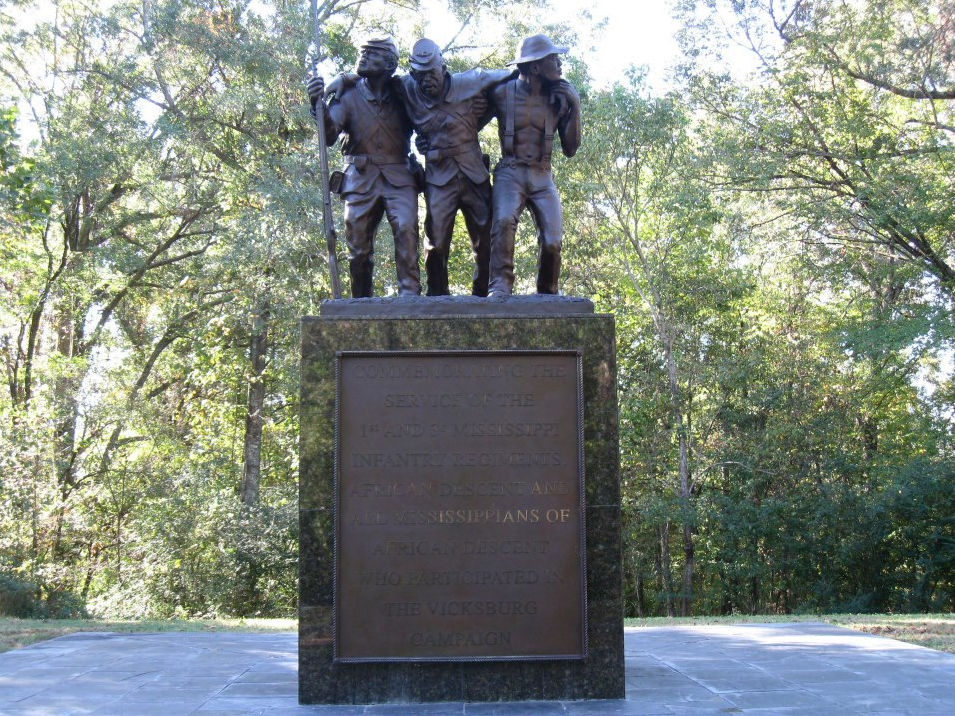
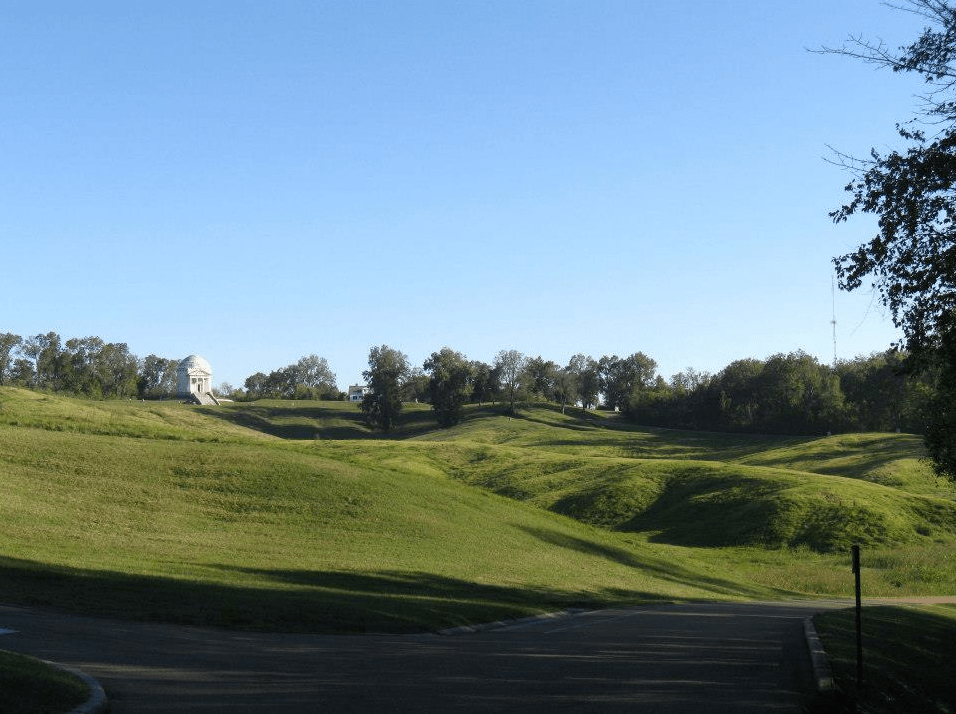
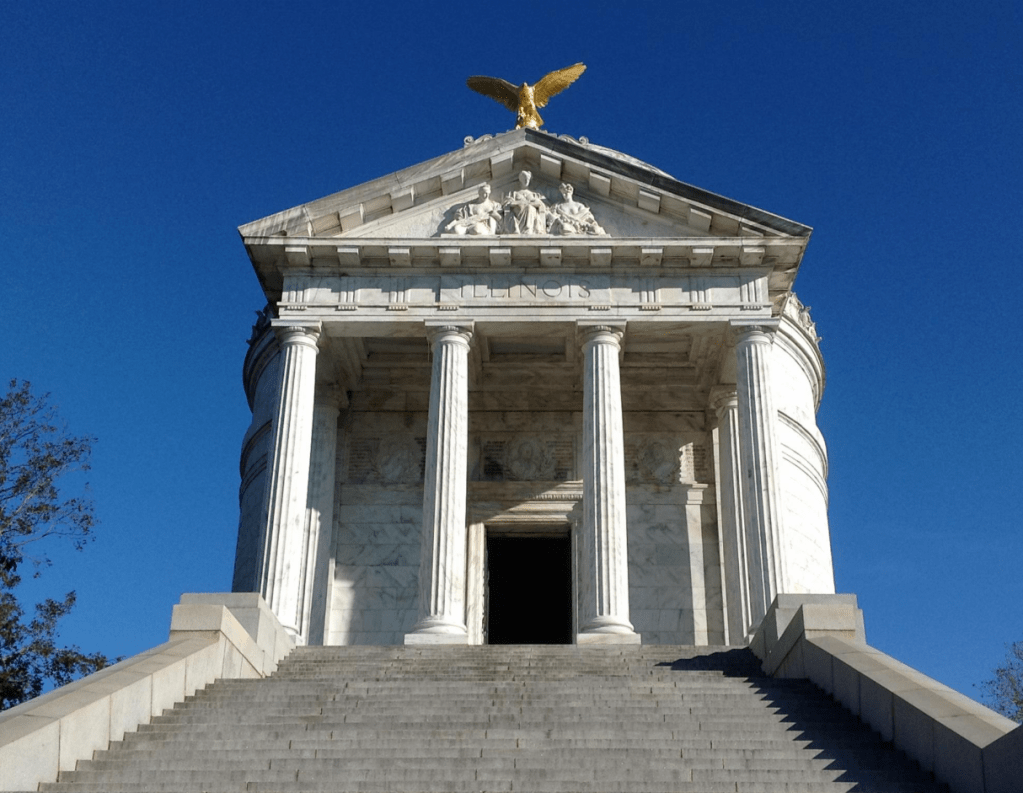
It’s easy to get caught up in the views, the monuments and the beautiful scenery, but think about what you don’t see. Walking here isn’t just a hike—it’s stepping through layers of survival, resilience, and stories that never really left.
MILE MARKER: Civilians dug hundreds of caves into the hills to survive constant bombardment…entire families lived in them for weeks. It’s one thing to walk the trails but it’s another to imagine living beneath them.
HIKE IT!: While there are no traditional hiking trails (the one hiking trail, Al Scheller Hiking Trail, is currently closed as of this publication), Tour Road is a walkable, pedestrian-friendly, way to create walking loops that range in length from 3 miles to 16 miles. Along the left side of the road, there is dedicated lane for non-motorized transportation. Pets are welcome on this road, but must be kept on a 6 ft or less leash at all times, and owners are responsible for picking up after their pets.
 Two Chicks with Hiking Sticks